

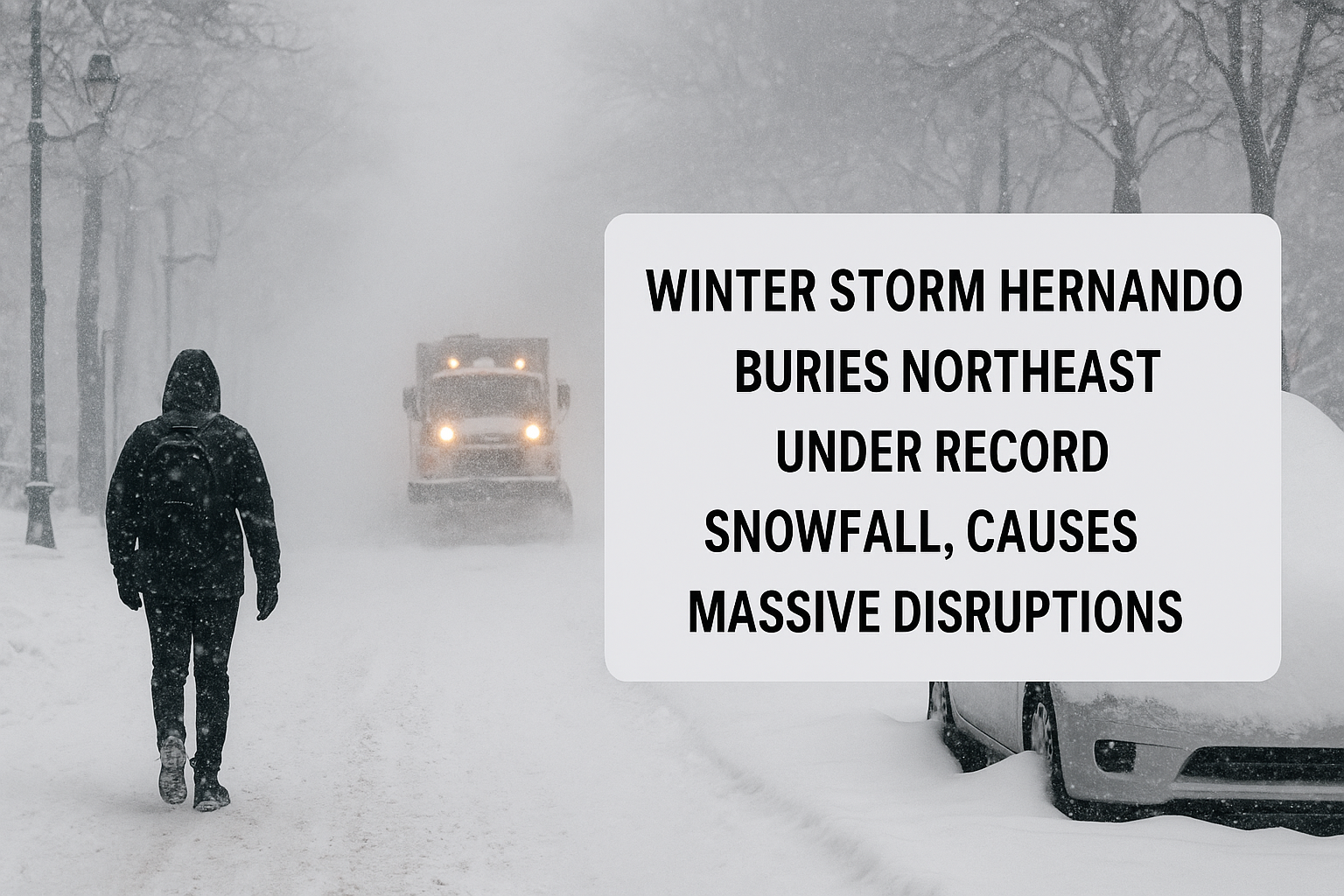
Feb. 24, 2026 — New York — Winter Storm Hernando, a historic bomb cyclone and nor’easter, dumped up to 37.9 inches of snow across the Northeast from Maryland to Maine on Feb. 23, affecting over 40 million people over 700 miles, triggering more than 500,000 power outages, over 10,000 flight cancellations and widespread travel bans.
The storm rapidly intensified through bombogenesis, dropping 39-40 millibars in under 24 hours and producing hurricane-force gusts up to 83 mph. Snowfall records shattered in multiple areas, including 33.5 inches in Providence, Rhode Island—surpassing the 1978 blizzard mark—and 36.2 inches in Warwick, R.I. Other totals included 29 inches in Babylon, N.Y.; 26 inches in Freehold, N.J.; and nearly 20 inches in New York City’s Central Park, the ninth-highest on record since 1869.
Power outages peaked above 650,000, with Massachusetts hardest hit at nearly 300,000 customers, followed by New Jersey with over 140,000. Restoration efforts slowed due to downed trees, drifts and winds exceeding 60 mph. Flight disruptions topped 10,000 through Tuesday, including 5,600-6,000 on Monday at major hubs like Boston Logan, JFK, LaGuardia and Newark.
Travel bans persisted into Tuesday in parts of Massachusetts, Rhode Island and New Jersey, while New York City lifted its nonessential ban at noon Feb. 23 amid icy roads. Transit systems faced widespread halts: NJ Transit suspended most service; NYC subways and buses delayed; Amtrak routes disrupted.
“This appears to be the most historic blizzard we’ve received.”
— Josh Estrella, Providence spokesman (NYT)
Meteorologists attributed the storm’s ferocity to “Goldilocks” conditions—ideal temperatures for heavy, wet snow—and a perfect coastal track fueled by warm ocean air.
“It hit the ‘Goldilocks situation’ of just the right temperature for wet, heavy snow… any warmer and it wouldn’t have fallen as snow. Any colder and there wouldn’t have been as much moisture.”
— Owen Shieh, NWS Weather Prediction Center (AP)
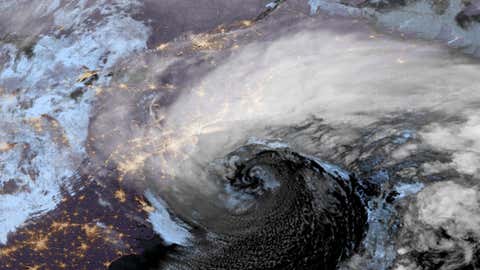
Satellite image of the storm nearing peak intensity (Weather.com)
Officials urged residents to stay indoors during cleanup. New York City Mayor Zohran Mamdani said city teams worked “nonstop to prepare,” boosting pay for emergency shovelers to $30/hour. Massachusetts Gov. Maura Healey described conditions as “as bad as I’ve seen it,” restricting travel in several counties.
As of late Feb. 23, heaviest snow ended but winds persisted, creating whiteouts from drifts into Tuesday. Additional light snow was forecast mid-week. The storm, compared to rare events like 1978 and 2016 blizzards, marked the worst in some areas since 1996 per early reports.